
Key Takeaways
1
Kitting is the fulfilment process of grouping several individual SKUs into a single, pre-built kit that’s stored, picked, packed, and shipped as one unit with its own SKU and barcode.
2
Kitting is not the same as bundling. Kits are built before orders arrive, while bundles are picked item by item after a customer buys.
3
Kitting is as much an inventory-accuracy task as a packaging task, since component stock has to stay correct across every channel you sell on.
4
Kitting supports selling the same catalogue across DTC, marketplaces like Amazon, Walmart, and TikTok Shop, and retail.
5
Pairing kitting with custom-branded packaging and inserts turns an ordinary shipment into an unboxing moment that brings customers back.
6
ShipBob offers value-added services like kitting inside one fulfilment platform, so prep, inventory, and shipping stay connected.
Customer experience decides who comes back in ecommerce. Brands compete hard to stand out, and the moment a package arrives is one of the few times you have a shopper’s full attention.
Ecommerce kitting is a small part of order fulfilment, but getting it right sharpens your presentation, speeds up operations, and lifts retention. It also lets you sell curated sets without slowing down the warehouse.
This guide breaks down what kitting is, how the kitting process works, the benefits, and how ShipBob connects kitting and fulfilment on one platform.
What is kitting?
Kitting is the fulfilment process of grouping multiple individual SKUs into a single, pre-assembled kit that’s stored, picked, packed, and shipped as one unit.
In plain terms, kitting is basically preparing inventory ahead of time so it’s ready to sell and ship as one product.
Kitting in a warehouse can be small or large in scope. On the small end, it might mean unwrapping a unit from its manufacturer packaging, checking it, or applying a sticker so the item reaches its final, pickable form.
More often, kitting refers to gathering several products and packing them together in advance so they sell under one SKU, or “kit.” Common examples include:
- Gift sets
- Starter kits
- Promotional kits
- Product-and-accessory sets
- Seasonal sets
- Subscription boxes
Once built, a kit is treated as a single unit with its own SKU and barcode across storage, sale, picking, packing, and shipping.
What is full kitting?
Full kitting is short for “fulfilment kitting,” and it refers to any kitting done during the fulfilment process. The terms “full kitting” and “kitting” describe the same activity.
The difference between kitting and assembly
Kitting and assembly get used interchangeably, but they aren’t the same. Assembly changes the product itself, like building a piece of furniture from parts.
Kitting makes final touches to items that are already finished, like placing them together in a box or adding a sticker. ShipBob handles kitting, not product assembly.
The difference between kitting and bundling
Bundling and kitting both group multiple products under one SKU, which is why they get confused. The difference is timing and method. Bundling is a sales and merchandising strategy, while kitting is the operational process that makes a set shippable.
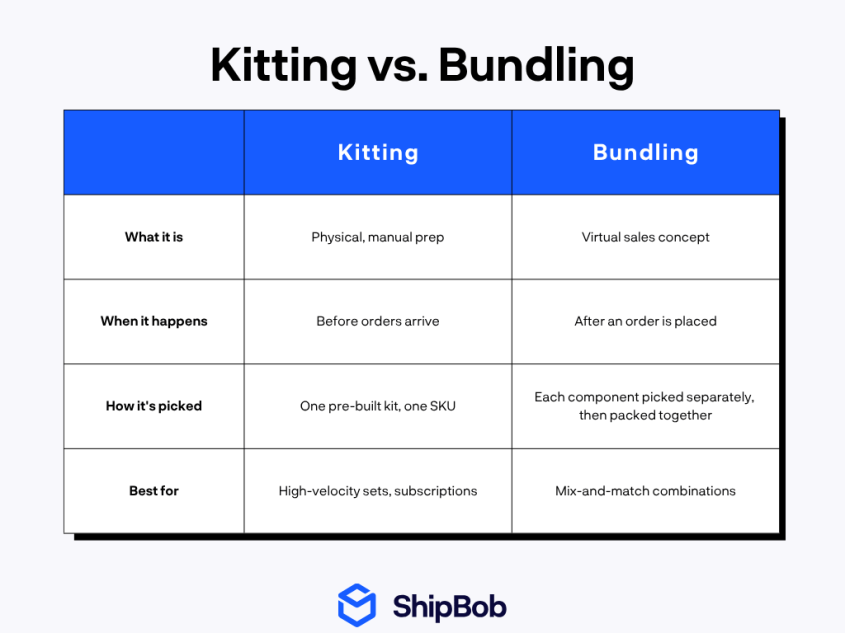
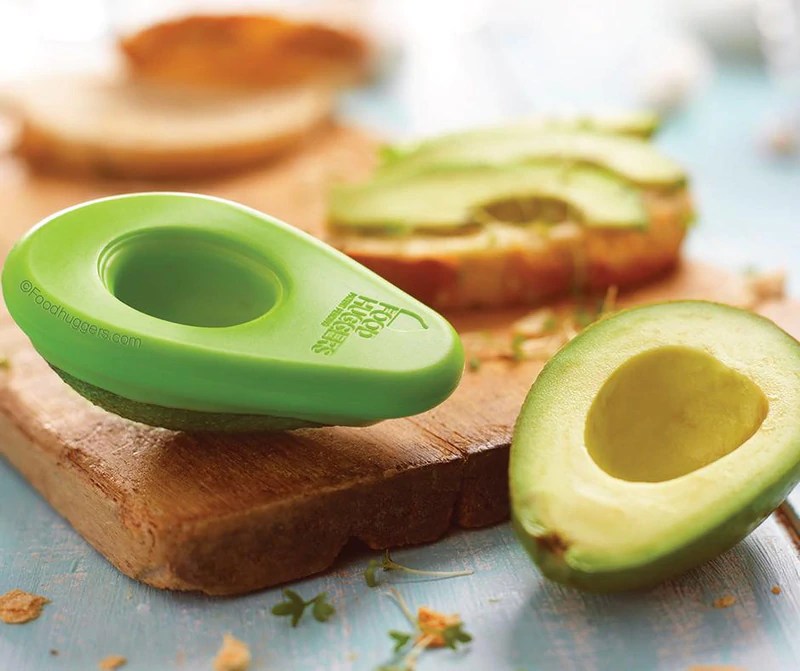
Reusable food storage brand Food Huggers, for example, sells a set of Hugger Bags that customers can buy as one offering instead of adding each size to the cart. A set can ship as a pre-built kit or a virtual bundle, and each moves inventory differently.


The benefits of kitting
Using value-added services like kitting inside an omnifulfillment platform gives growing brands room to move faster without adding warehouse headcount.
The gains show up in labour, accuracy, storage, cost, and customer experience. Here are the ones worth planning around.
👷 Faster fulfilment and lower labour costs
When an order comes in for a kit, staff pick one item instead of hunting down several across the warehouse. Fewer picks per order means fewer labour hours per shipment, which speeds up turnaround.
Some kits need only a shipping label once they’re built, so orders leave sooner after a customer buys. Faster order prep translates directly into faster delivery.
✅ Fewer errors and better quality control
Pre-building kits creates a natural quality checkpoint. Each kit is put together to a documented set of steps, inspected, and barcoded before it ever reaches the pick line.
That catches problems early, like a supplier forgetting to bag or label a unit. It also cuts picking and packing errors at order time, since the components are already gathered and verified.
🗺️ Better warehouse organisation
A kit lives in one storage location instead of being scattered across shelves as separate items. That makes it far easier to store, find, and pick. The result is less wasted space and picking time, plus cleaner visibility into how inventory moves through fulfilment.
💸 Lower packaging and shipping costs
Consolidating several items into one package reduces dimensional weight and cuts how much packaging material each order uses. ShipBob’s box selection algorithm then packs each kit in the most cost-effective box, whether or not the contents are fragile.
US shipping is zone-based. Positioning fast-moving kits closer to customers with the Inventory Placement Program helps reduce your average shipping zone and the cost that comes with it.
🤩 Consistent, branded customer experience
Kitting standardizes what every customer receives: the same presentation, the same inserts, the same unboxing. That consistency is hard to hit when each order is put together from scratch.
Pairing kitting with custom-branded boxes, tissue, and inserts is where the experience gets memorable.
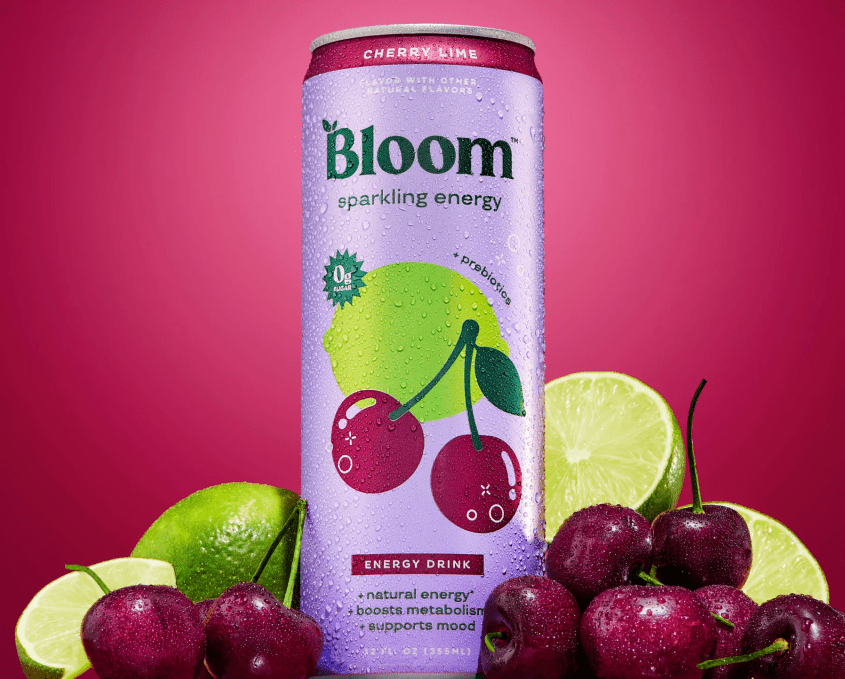
Wellness brand Bloom, for instance, ships in branded boxes with pink mailer inserts and marketing materials that make each delivery feel intentional.


💰 Higher AOV and promotional flexibility
Like bundles, kits can raise average order value by combining products customers perceive as better value together than apart. Curated sets also nudge shoppers toward buying more of your catalogue at once.
Kits give you a fast lever for branded campaigns, limited-edition drops, and seasonal sets. You can deliver that experience wherever you sell.
How does the kitting process work?
The kitting process looks different for every brand and project. Some runs mean adding a sticker to each unit of one SKU, while others involve removing packaging, building boxes, and arranging items just so. For most ecommerce brands, building a kit follows the same four steps.
💡
Quick tip: Barcode scanning at receiving, assembly, storage, and pick keeps the right components in every kit at scale.
Step 1: Determine what will be included in the kit
First, decide what goes in the kit. You might group products by theme, use, or how well they sell together.
Say a candle company wants to sell make-your-own-candle kits. Each kit needs everything a customer requires to make a candle, for example: wax, fragrance, coloring, and wicks.
Step 2: Create a new SKU
Next, assign the kit its own unique SKU so it becomes a single sellable product. Enter that SKU into your inventory system so sales and stock counts track accurately, the same as any single-item SKU.
Step 3: Assemble the kit
Building the kit is the most involved step. Staff gather the components, prepare each one, and place them into the designated box following a documented set of instructions.
The finished kit then gets a barcode and its kit SKU label for warehouse scanning. A quick inspection confirms every component is present and packed to spec before the kit moves into storage, so nothing incomplete reaches a customer.
Step 4: List the kit for sale
Finally, create a product listing for the kit. As orders arrive, the pre-built kit is picked from its location, sent to packing, and labelled for shipping.
The different types of kitting
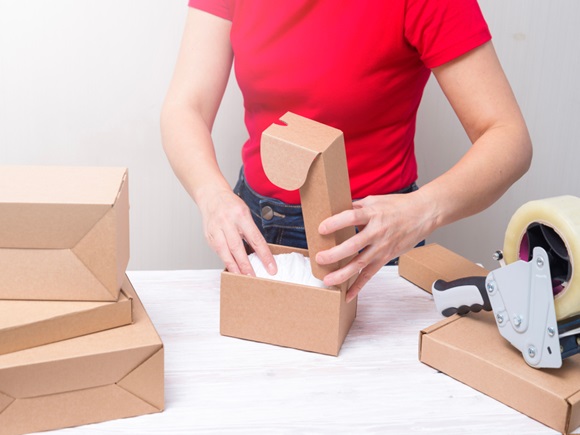
Kitting doesn’t always happen at the same point in the supply chain. It can take place before a manufacturer ships goods to a brand, during regular fulfilment, or for specific order types. Here’s how the common types compare.
Warehouse kitting
Warehouse kitting is the most common type of kitting, and it maps closely to what people mean by kitting in a warehouse. Components arrive, get staged in a dedicated kitting area, and are built into finished kits against a work order.
Operationally, each kit is barcoded and stored shelf-ready so it can be picked as one unit the moment an order comes in. Brands lean on warehouse kitting for high-velocity SKUs, subscription runs, and seasonal promotions where the same set ships over and over.
This is where a kitting warehouse setup differs from on-demand or virtual bundling. Pre-built kits sit ready on the shelf, while bundles and on-demand kits are pulled together only after a customer orders.
Manufacturing kitting
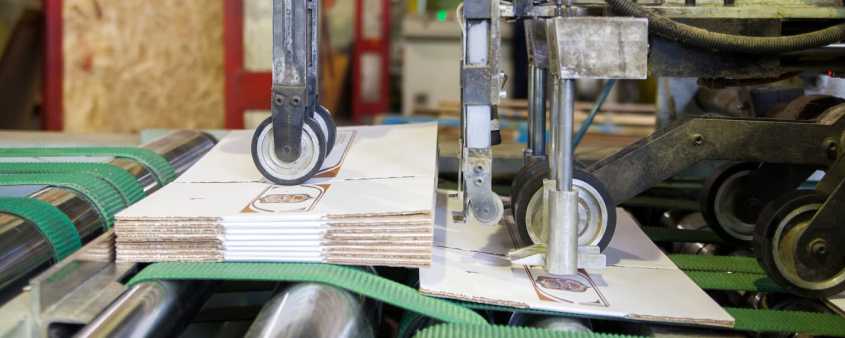
Manufacturing kitting happens at the manufacturer, before finished inventory reaches the brand. Material kitting means the manufacturer groups finished pieces into one package to send onward, while internal kitting groups parts to speed up production on the assembly line.
Subscription boxes
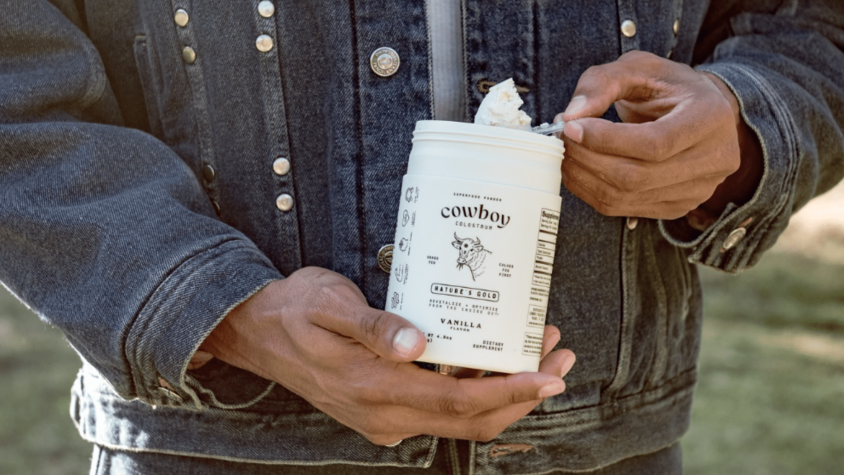
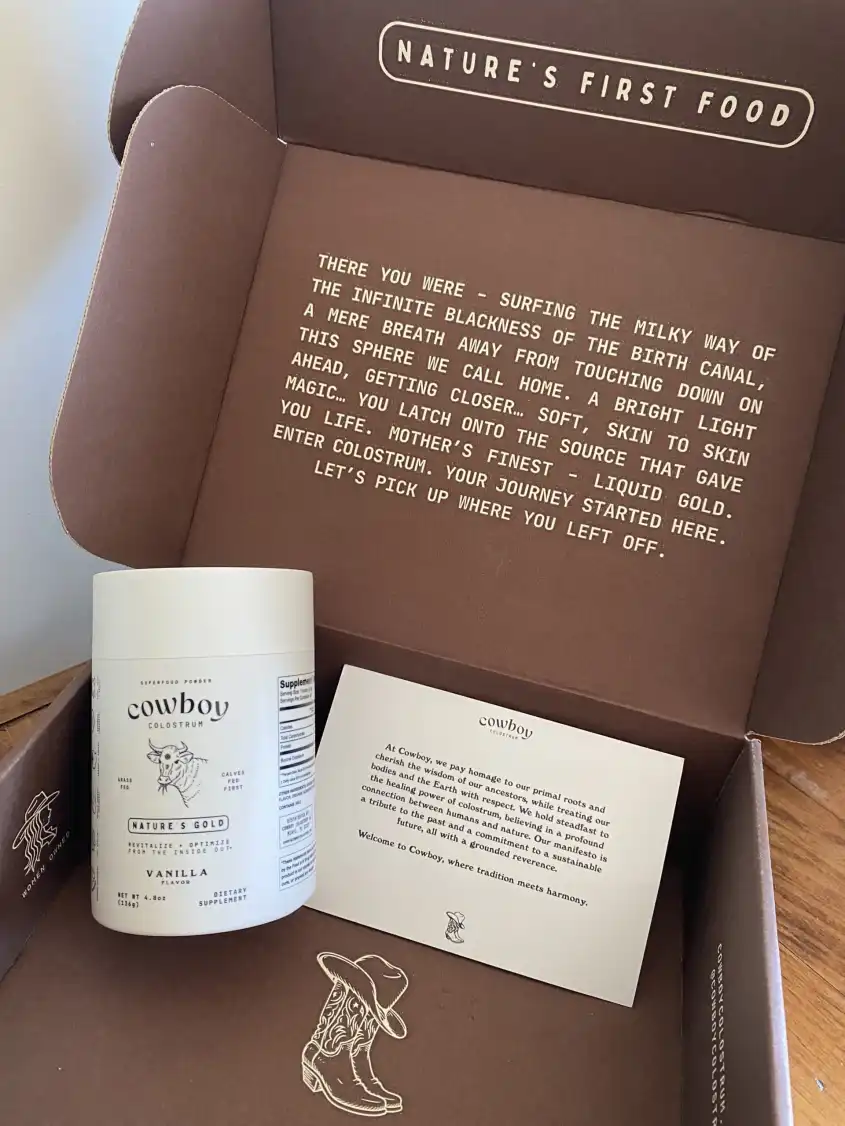
Subscription boxes hold a curated set of products shipped on a recurring cadence, often weekly, monthly, or quarterly.
Cowboy Colostrum, for example, uses kitting for their subscription boxes. These orders suit kitting well since the contents rarely vary between customers and repeat on schedule, so building them ahead saves real time while offering a premium unboxing experience.

On-demand kitting
On-demand kitting is essentially “build your own bundle.” The brand doesn’t decide the contents; the customer picks from standalone SKUs, and the personalised kit is put together after the order is placed.
Kitting for marketplace and omnichannel fulfilment
Brands rarely sell on one channel anymore, and kitting has to keep up. The same product might be purchased through Shopify, Amazon, Walmart, or TikTok Shop, and through retail or wholesale orders. Each channel has its own packing needs.
Channel-specific kitting is common as a result. One channel may need a different insert or box, while retail buyers often want products packed in specific case-pack configurations before they’ll accept a shipment.
The tricky part comes when you sell the same component SKUs individually on one channel and inside kits on another. Stock has to stay accurate everywhere at once, which is where a fulfilment platform earns its keep.
ShipBob’s virtual bundling handles this by grouping component SKUs under a parent SKU as a virtual container; inventory then stays unified across channels.
The picking algorithm identifies the right components at order time, and reorder notifications fire on both the component and kit SKUs.
If demand shifts, de-kitting work orders let you break previously built kits back into individual components so a channel can sell them separately again.
Kitting and inventory accuracy
Kitting is as much an inventory-accuracy challenge as a packing one, and it’s the part brands miss most often. When the same SKU sells on its own, inside a kit, across marketplaces, and through B2B, component-level stock has to decrement in real time everywhere at once.
A single stockout on one component can make an entire kit unfulfillable, even when every other item in it is sitting on the shelf. This is why the relationship between parent SKUs and component SKUs is easy to underestimate.
HIGHLIGHT: ShipBob’s virtual bundling and unified inventory tracking keep those component counts synced as orders flow in from different channels. Inventory accuracy is the line between kitting that scales cleanly and kitting that produces customer-facing stockouts and oversells.
How to manage the kitting process
Kitting gets complicated fast when it’s managed by hand, especially as new SKUs pile up and counts need constant updating. For most growing brands, the real question is whether to keep kitting in-house or hand it off, not which software to buy.
A few signals suggest in-house kitting has run its course:
- Order volume climbing faster than your team can prep
- Seasonal spikes that overwhelm available labour
- Error rates creeping up as complexity grows
- Labor and space constraints in your own facility
Cost depends on the work itself: labour per unit, how many components go in, packaging complexity, and whether units need inspection. Shipping costs stay variable, based on weight, dimensions, destination, and service. It’s worth requesting a custom quote rather than estimating.
Timing is manageable, too. Standard kitting work orders of up to 500 kits typically carry a 2 to 3 business-day turnaround, extended only when components are missing.
How ShipBob supports kitting at scale
As a global omnifulfillment platform, ShipBob offers the kitting and fulfilment solutions brands need to sharpen their orders and keep operations connected.
Kitting lives on the same platform that handles ongoing DTC, marketplace, and B2B fulfilment, so prep, inventory, and shipping never drift apart. Here’s how ShipBob supports kitting at scale:
Kitting services
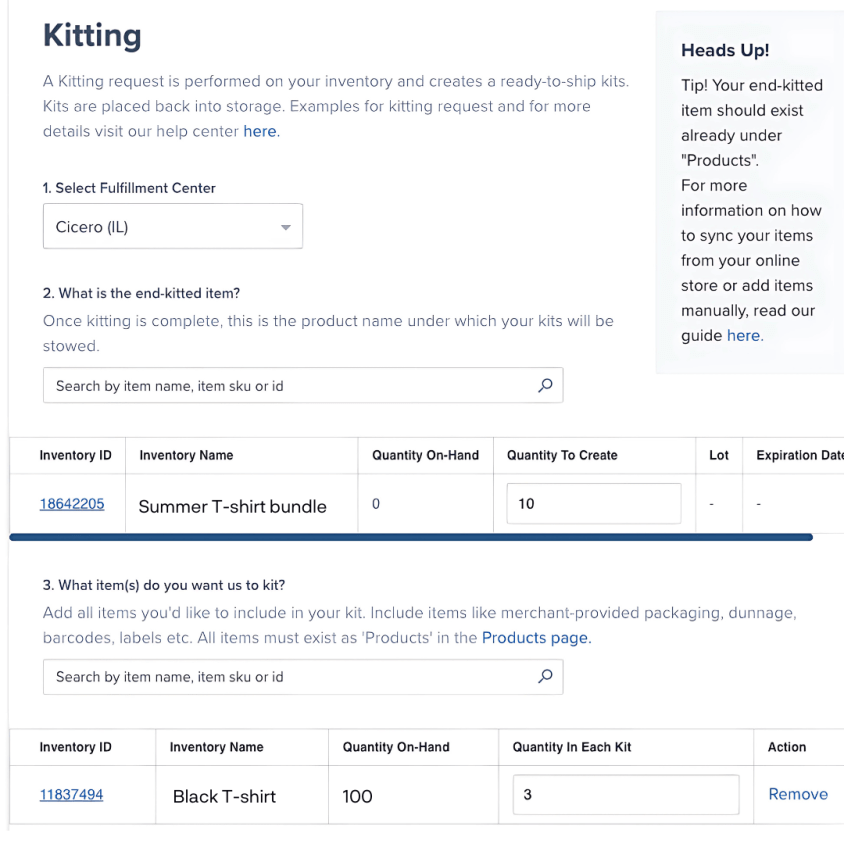
Kitting work orders let you pre-build sets into ready-to-ship SKUs. This includes more involved tasks like folding custom boxes, inserting dividers, and barcoding units, all with published turnaround times. You decide the contents and the number of kits, submit the request in the ShipBob dashboard, and generate a price estimate before you commit.
Product bundling
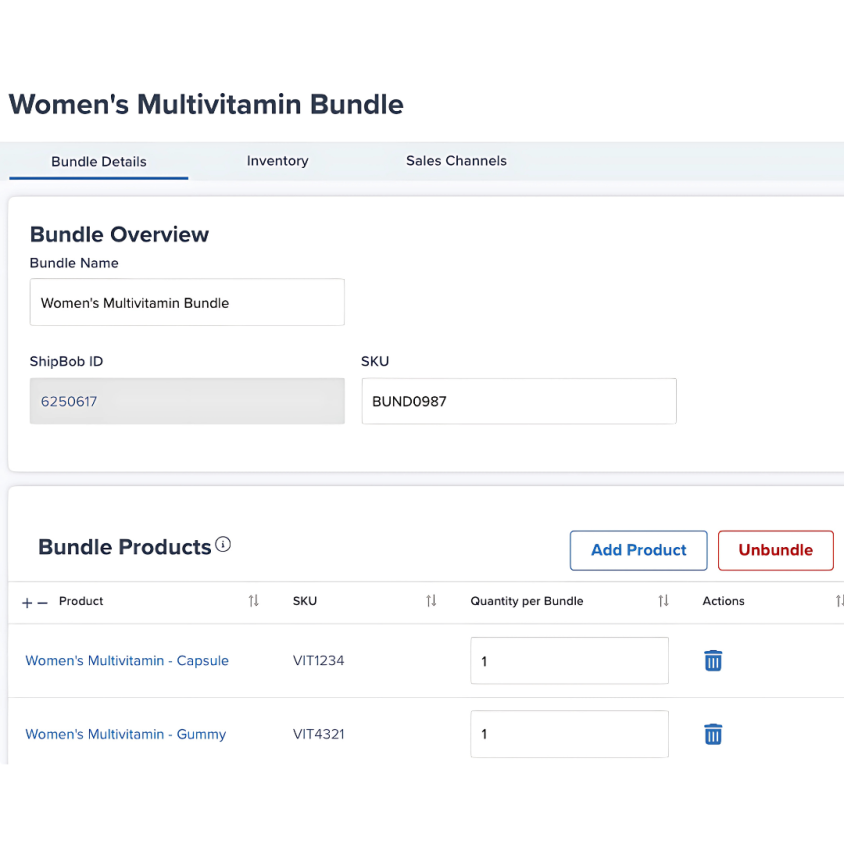
Virtual bundling and de-kitting work orders round out the toolkit for brands that need to shift between selling components individually and selling them as sets.
“ShipBob’s digital bundling feature is huge for us. With digital bundling, ShipBob packs bundles as they’re ordered, so we’re not tying up inventory in pre-packaged bundles. This is advantageous for testing things with our customers. With digital bundles, we can include a gift with purchase or be particular about how we present products to a customer. Digital bundles with ShipBob have allowed us to stay agile and increase how much money our customers spend with us. It is an essential part of our business.”
Annie Leal, owner of I Love Chamoy
Customisation Suite
For customer experience, ShipBob’s Customisation Suite connects kitting to branded packaging. Brands supply their own custom boxes, poly mailers, and dunnage, which ShipBob stores as unique SKUs. You can then apply SKU-level packaging rules, on-demand gift notes, and marketing inserts.
ShipBob’s partnership with custom packaging maker Arka gives brands a direct path to branded boxes built for these unboxing moments. Custom kitting and printed gift notes carry an added cost.
“For us, elevating the unboxing experience is worth the extra cost. We’re spending money on it because we want to give our clients the best experience – not just starting when you use the product, but from the moment the package is placed on their doorstep.
ShipBob’s Customisation Suite enables us to use our own customer branded boxes in different sizes for different products, as well as high-quality materials like silk wrapping paper and a Particle sticker. The end result is a sleek, elegant package that’s especially curated for our customers and shows them they’re worth every penny.”
Nadav Haras, VP of Supply Chain at Particle
Quality control
Inside the ShipBob dashboard, you can upload photos to document how a kit should be arranged, review packed kit and pallet photos for visual quality control, and submit, edit, or duplicate work orders as your kits evolve.
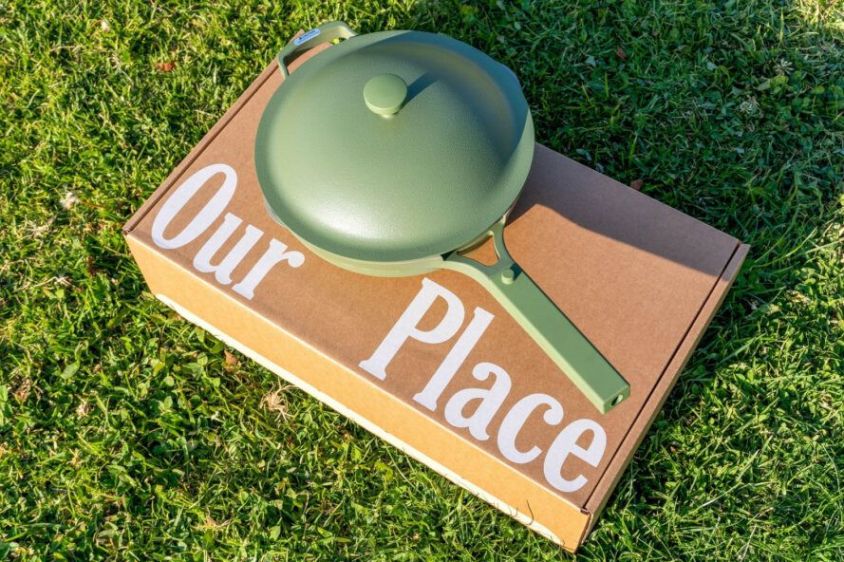
“Regarding warehouse operations, ShipBob provides technology that empowers every warehouse worker. These workers not only receive information on which items to pick and which box to use, but they also have access to a visual aid though a GIF, guiding them on the optimal positioning of items within the box for maximum efficiency.”
Ali Shahid, COO of Our Place

If you’re interested to know more about how ShipBob can support your brand with kitting and fulfilment, request a quote today.
Full kitting FAQs
Below are answers to some of the most common questions about kitting.
What is kitting in ecommerce?

In ecommerce, kitting is the process of combining individual SKUs into a single, finished kit that’s ready to ship as one unit. It can be as simple as prepping a unit for fulfilment or as involved as packing several products together under one SKU ahead of orders.
What is the difference between kitting and assembly?
Kitting makes final touches to products that are already finished or groups several items into one offering. Assembly changes or builds the product itself. ShipBob handles kitting, not product assembly.
Where does kitting fit into the supply chain?
Kitting can happen during manufacturing or warehousing, but in ecommerce it most often occurs during fulfilment, especially for subscription and build-your-own-bundle orders. It also shapes how brands prep the same catalogue for DTC, marketplaces, and retail.
Is it better to have my manufacturer or fulfilment partner handle kitting?
Manufacturer kitting works well for simple, high-volume kits whose contents rarely change, and it’s usually cheaper per unit. A fulfilment platform like ShipBob is the better fit when you need flexibility, such as pre-kitting, de-kitting, virtual bundling, channel-specific packaging, or quick changes to what’s in a kit. For brands that value agility, ShipBob is the stronger choice.
When should a brand pre-kit products instead of using a virtual bundle?
Pre-kit when a set ships at high volume and its contents rarely change, since building ahead saves the most time there. Use virtual bundling when the components also sell individually, when the mix varies by channel, or when you’d rather not tie up capital in pre-built kits that may not sell.
How do returns work for kitted products?
Returned kits can be inspected, and if the components are still sellable, a de-kitting work order breaks them back into individual inventory. Stock is then reconciled at the component level so counts stay accurate.
What metrics should brands track to evaluate kitting performance?
Watch assembly accuracy rate, cost per kit, order-to-ship speed, labour hours per kit, error rate, and turnaround time on work orders. Together these show whether kitting is saving money and time or quietly eating into both.


